Meditation on Intelligence
Near-Brainless Cognition, etc. Something WEIRD is goin' on...

I guess most of this relates to my past articles on plant intelligence and Robert Anton Wilson’s erotic cosmology, but it didn’t start there.
Nazi Brains: Fascist Signatures?
I was wondering about the fascist mind. This eventually led to a weird story about a psychiatrist named Douglas M. Kelley, who was able to interview and do some tests on 22 high ranking Nazis at Nuremburg, including Göring and Hess. There seemed to be nothing unusual about them. The banality of evil, as Arendt said. Some Americans thought there might be a tell-tale fascist sign in the brains of these Nazis. One Nazi, Robert Ley, had seemed to Kelley to be particularly non-sane. While in his cell in Nuremburg, Ley managed a suicide using the pipe from his toilet, a zipper from his jacket, and the hem of his towel: Kelley thought he had hit some luck: an autopsy and physical Nazi brain to ponder. His expert friend found the frontal lobe damage that Kelley had predicted. But later, at Langley-Porter hospital in San Francisco, pathologists found nothing abnormal with Ley’s frontal lobes. Kelley was exceedingly bothered that the Nazi personality didn’t leave traces in the brain. In the ten years after the war, he spiraled in fits of anger, alcoholism and over-work. In 1958 he offed himself the same way Göring had: by swallowing a cyanide capsule.1
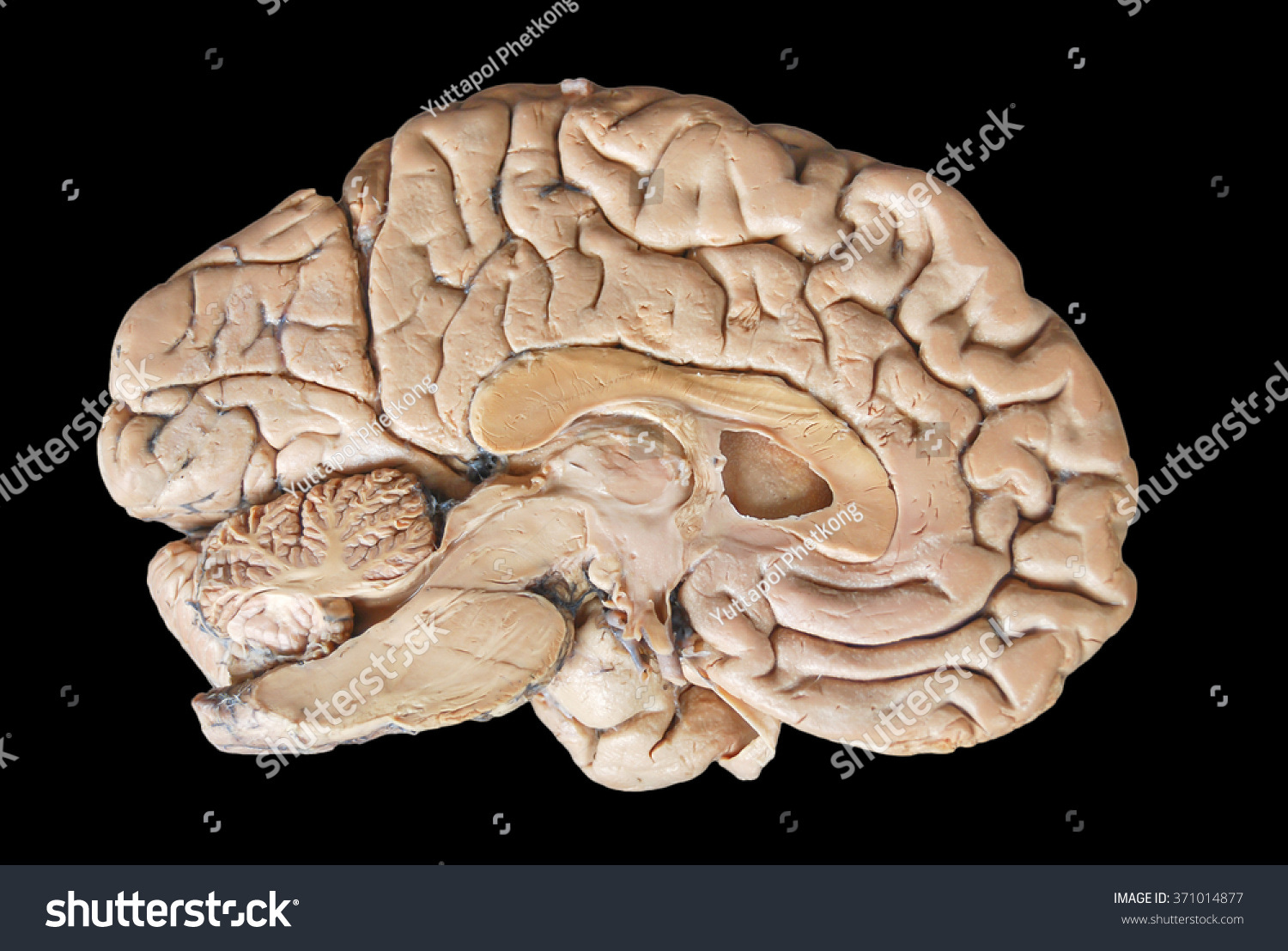
Einstein’s Brain: Non-Abby-Normal
This reminded me of Einstein’s brain, which, after he died in 1955, had been subject to theft and fetishistic obsession. The brain itself looked like just about anyone else’s. Journalist Steven Levy was given the assignment to hunt down Einstein’s brain in 1976, for New Jersey Monthly. He ended up in Wichita, Kansas, where Einstein’s brain was floating in formaldehyde in a mason jar in a cardboard box labeled Costa Cider. It was in the office of Dr. Thomas Harvey, who didn’t seem much interested in it. But Levy was mesmerized:
I had risen up to look in the jar, but now I was sunk in my chair, speechless. My eyes were fixed upon that jar as I tried to comprehend that these pieces of gunk bubbling up and down had caused a revolution in physics and quite possibly changed the course of civilization. There it was! 2
In 1985 two neuroanatomists lobbied Harvey for some Einstein brain-slices. They wanted just a few pinches, from selected hotspots in Einstein’s frontal lobes, where the abstract thinking magic happened. They suspected there’d be lots of glial cells that support the neurons in the inferior parietal lobe of his left hemisphere: abstraction, calculation, planning, imagery, attention. They found less glial cells in Einstein's brain there. Perhaps this was linked to his late speech as a child? He was thought dumb and didn’t like to use language, but realized he’d better demonstrate decent speech capabilities if he didn’t want to keep being called a dummkopf. He silently rehearsed a full sentence before uttering, but when he did so his nursemaid called him Der Depperte, “the dopey one.”
I thought about how fetishized physical brains had been in the past, even now. Roland Barthes had a chapter on Einstein’s brain in his book on stimulating semiosis, Mythologies.
Alfred Korzybski wanted a colleague to check out his brain after he died, which he did in 1950. Korzybski had worked with Dr. Nolan D.C. Lewis at St. Elizabeth’s (“S’Liz” was the way Ezra Pound referred to it when he was there and supposedly criminally insane, 1946-1958). Dr. Lewis had handled many human brains and both he and Korzybski were totally fascinated by questions of consciousness, behavior and the brain. Here’s what Lewis saw in Korzybski’s brain:
It showed some of the normal shrinkage due to the age of the man, but it had a very rich blood supply which is significant and a complex convolutional arrangement which will be very important to study in detail, as it is the brain of a great scientist.3
“Anyone With Half a Brain…”
Speaking of Korzybski, when he was working at St. Elizabeth’s he noticed a patient who had walked around, said hello, etc. The patient died and they performing an autopsy: this patient had no brain at all! WTactualF?4
A woman aged 24 has CAT scan and is found to have no cerebellum. Instead, it was all cerebrospinal fluid. Well, she had problems walking and talking until age 6-7. But still…I thought the cerebellum was utterly crucial. Guess I’ze wrong, wrong, wrong.5
Another woman read an article about how the brain reacts to music, so she wrote the authors about her own weird brain. They referred her to a cognitive neuroscientists at M.I.T. It was found this woman had no left temporal lobe. She should be having seizures, experts told her; she should have not much vocabulary at all. But she has a graduate degree and speaks a second language, Russian, and has scored in the 98th percentile for vocabulary. It makes no sense. What’s there instead of the temporal lobe? Cerebrospinal fluid.
In 2007 Lancet reported on a 44 year old French civil servant with an IQ of 75, but he was married and had two kids. He was missing 90% of his brain. Or: his hydrocephaly had compressed his brain into one thin layer on the outside, with nothing but fluid below. It was mostly CFS. He was healthy, had had hydrocephalus as a child, they put in a stent, later took it out. It looks like his brain kept eroding, but he was able to do a lot with hardly any brain, or a flattened one. This fuels Dr. Axel Cleeremans’s “radical plasticity“ thesis of consciousness, as you can read about in the link.
Another man had the same thing: hydrocephalus: virtually no brain at all. But his IQ was not 75; it was 126 and he had a degree in Mathematics. This has given rise to an idea that networks of brain tissue can be tightly clustered into highly-interconnected “cliques.” It’s as if this guy’s horrific brain trauma caused by hydrocephalus made him smarter. Biologist and science fiction writer Peter Watts wonders how a guy like this, with the brain “the size of a poodle’s” can do math better than him.
There are very many cases like these. I suspect they play too much havoc with entrenched ideas about intelligence, consciousness, and philosophical ideas that those with possible vested interests, when they read about this, think about it in a similar way when we read about frogs falling from the sky. They banish this knowledge, because it ought not be…or you’ll have to revamp all your assumptions. Which - I get it - would seem like a slog. But a revampin’ we must go, methinks.
When I read about this stuff I begin to think how overrated my brain is, our brains are. It’s almost as if we could get by without any at all. The guy with a degree in math was almost all fluid. Not much brain to speak of and yet: degree in Math. I mean, c’mon. We must be thinking about the subject of intelligence and how it works in some crucially flawed way.
At the very least, we’re thinking about intelligence all wrong. Or mostly wrong. It’s gotta be weirder and much more wild and fascinating than we ever thought.
Pour One Out For Mike
Then there’s Mike the Headless Chicken, who survived for 18 months after being decapitated. Put that in your bucket and eat it, mainstream neurobiologists!6
“The Curious Case of Robert Ley’s Brain,” Jack El-Hai. Douglas Kelley’s Wikipedia page HERE.
Strange Brains and Genius: The Secret Lives of Eccentric Scientists and Madmen, Clifford Pickover, pp.204-208. 1998.
Korzybski: A Biography, Bruce Kodish, p. 623. 2011. You’d want a friend to say ya had complex convolutions, or what’s a pal for? Amirite?
ibid, p.266. This discrepant bit of data Korzybski encountered apparently had the same effect of all those scientists working under a powerful paradigm, in the Kuhnian sense. He didn’t know how it fit into the current model (still holding strong, but there is teetering here and there) that Kuhn called “normal science.” To be fair to Korzybski, he had doubts about the existence of time and a few other avant ideas.
Mike the Headless Chicken Wikipedia page, which has many links. HERE.

(It’s Bobby Campbell’s artwork on this logo)
Inspired by McKenna & Sheldrake, I enjoy the model of the nervous system tuning in intelligence via morphic resonance. I don't know that I "believe" in it, but it jives well with some of my weirder experiences.
A friend used to work for an academic publisher and got me a copy of "World Futures - The Journal of General Evolution" edited by Ervin Laszlo, a special issue all about the Akashic Field. (or A-Field when feigning respectability!) Lot of neat ideas out there for memory and intelligence existing independent of human brains.
There's also that great bit from "The Invisible Landscape" about Karl Lashley's experiments with rats where only total removal of the cerebrum was sufficient to totally disrupt recall, suggesting holographic memory storage :)))
I have no idea what to make of all this, but what a great collection of anecdotes.
This piece is a good example of why your readers should pay attention to your footnotes. I read the praise that Lewis lavished on Kortzybski’s brain and thought, “Oh, come on,” then I read Footnote 3!