On the "Simulation Hypothesis"
If it's true, why did They come up with...Gaza/Minneapolis/Hiroshima, etc?

Sorry I haven’t been churning out that scintillating stuff you all know and sometimes read and comment upon, but, though I’ve never been a “depressed” person, I have been feeling like Nothing Matters lately. In times like this…not sure what to say. I’m glad cannabis exists.
Brief Rundown of Bostrom’s Riff
Along the lines of stoned thinking: the Simulation Hypothesis, which coalesced in and around the mind of Nick Bostrom, c.2003.
As I understand it, Bostrom says it’s conceivable that a technologically advanced civilization other than ours might have run a very large number of simulations of what their ancestors might have been like, so they programmed these extremely sophisticated algorithmically-based simulations of conscious, philosophically thoughtful, self-reflective “beings” with attitudes and experiences in their (fake) world that are like ours. Or flatly: are us. We just think we are who we are, with our histories and experiences, etc. Or we are all those things - remembering, reflecting on ourselves and experiences - but it’s all algorithmic simulation. The Simulators got really good at this and did it millions of times, or more. We are just one model They came up with.
So, like you’re sayin’ nothing is real? Like we’re in Strawberry Fields? Or, like, ya know, what Pink Floyd says in “Wish You Were Here”: we’re just two lost souls swimming in a fishbowl, year after year? Whoa! What is this shit?
It’s a hybrid my friend came up with. Novel terpene ratio. She calls it Kali’s Shaven Vulva. You like?
Okay, so Bostrom says, you can have one of three takes on this: 1.) Technologically advanced Entities who run simulations like this is a bullshit idea, so just STFU; 2.) Technologically advanced Beings are all over the Universe, but they don’t do simulations like this; I imagine the idea has come up a trillion times and someone says, ya know, Naw, we got bigger fish to fry. We already know enough about our ancestors. Something like that. Or: 3.) Such technologically advanced Beings are all over the universe, and they fucking love doing simulations, and furthermore, there are countless Sims out there. Bostrom asks us to accept there are more Sims than non-Sims, among all the entities with civilizations ‘n shit. Bostrom thought there’s around a 33% chance for #3, which would imply we’re all probably Sims. What if we are Sims? I like comedian David Cross’s joke, about Homeland Security’s daily threat level during the Iraq War:
Honey, it says here the threat level is orange today and orange is: “High, or high risk of a terrorist attack.” What do we do?
Well, get out the bread and let’s make some sandwiches.
Not A New Idea, Methinks
I was brought up by a couple of quasi-hippies, and never went to church. Around age 17 I had to read the Bible on my own, just to see what all the shouting was about. I recall thinking Genesis was like someone dreamed it up. Probably it was a story dreamed up by many, told over and over until a good version of it prevailed, then, with writing, someone took it down. There are some weird problems, like there seem to be gods, plural, and then just the one god. What happened to the Others? I wanted to know more about them, but they just seem to have been forgotten. Adam, I later learned, had an earlier wife named Lillith and they got a no-fault divorce or something like that. In order to get a new squeeze, the Simulator took a rib from Adam…wild! People buy this? (Well, at the time I was reading the Bible and right wing Christianity was burgeoning, they were buying Man From Atlantis on TV, so…) Anyway, here is a transcendent Being making us and giving us ideas (one of ‘em was “Don’t get no funny ideas about knowledge, see?”), setting us down in a Garden, then walking away to watch from a nice vantage point. Proto-Candid Camera.
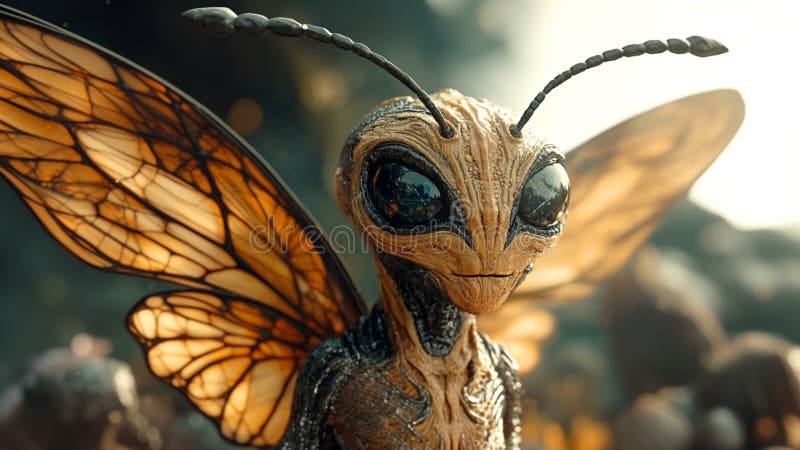
Arch-Taoist Chuang-Tzu AKA Zhuang Zhou AKA Zhuangzi, Chinese philosopher, (c.369-286 BCE; Socrates did the Hemlock Self-Offing trip in 399 BCE for perspective) had this idea: I dreamed I was a butterfly, fluttering and flitting about, happily doing butterfly things. Suddenly I woke up and realized I was the same ol’ Chuang-Tzu…or… am I the Butterfly, and only dreaming now that I’m some Chinese dude named Chuang-Tzu? Thus does everything transform into everything else, a Taoist basic.1
In 1713, the Irish Bishop Berkeley2 wrote, in his Philonous, “The brain therefore you speak of, being a sensible thing, exists only in the mind. Now, I would fain know whether you think it reasonable to suppose, that one idea or thing existing in the mind, occasions all other ideas. And if you think so, pray how do you account for the origin of that primary idea or brain itself?”3
In Scientist As Rebel, Freeman Dyson writes about how Olaf Stapledon had a prototypical sort of Simulation Hypothesis in his novel Star Maker (1937), in which there is an early version of the interpretation of quantum mechanics, called “Many-Worlds.” The Star Maker makes some universes into mature ones of extraordinary complexity. Taking a few pages from Stapledon, Sir Martin Rees had a thought-experiment concerned with the “fine-tuning” hypothesis that seems needed to account for this universe we live in, which, according to astrophysics, needed to be set-up just-so mathematically or life could not exist. How did we get so lucky? Rees says: with Many-Worlds, we would see an extremely high number of possible universes that would conform to some Cosmic Anthropic Principle, and we just happen to exist in one of those universes. Once again, we gotta ask: Who or What caused the Universes to exist? For some, it’s the old God Game again, from here to eternity. For others, it’s chaos and numbers and maybe some Hindu metaphysical thought thrown in. The point I’m tryna get at: this creation thing. It’s a bitch, isn’t it? 9th grade Trigonometry will not help me here. Here’s Dyson discussing Rees:
If our present universe is a simulation created by intelligent aliens interested in exploring the consequences of alternative laws of physics, then we should expect the laws of physics that we observe to be chosen in such a way as to make our universe as interesting as possible. We should expect to find our universe allowing structures and processes of maximum diversity. The immense richness of ecological environments on our own planet gives support to Rees’s proposal.4
I find it utmost refreshing to note this last item: ecological environments on our planet: Elon Musk, who said we absolutely live in a Simulation, wants to populate Mars, which would need to be terraformed and we don’t know how to do that. Mars’s soil is literally poison. 5
Apparently there are a number of science fiction novels that address a simulation hypothesis, including Greg Egan’s 1997 Diaspora.
If we veer back toward Philosophy, from the 1960s to the 1980s we got a lot of Other Worlds from modal logic, like that of David Lewis, who wrote On the Plurality of Worlds (1986), which built on counterfactual thinking like it was no one’s business but his own.
Others who seem to have had a Simulation Hypothesis idea predating Bostrom are Ed Frenkel (who I often mix up with Ed Fredkin), Jacques Vallee, Rudy Rucker, Stephen Wolfram, and Hans Moravec. And let us not forget the Wachowskis and their Matrix films.
Conspicuously absent from this discourse among philosophers are the names of Charles Fort, John Keel, and William Bramley, of Gods of Eden fame. Lemme just briefly riff on Fort here:
Fort writes in The Book of the Damned: “Would we, if we could, educate and sophisticate pigs, geese, cattle? Would it be wise to establish diplomatic relation with the hen that now functions, satisfied with mere sense of achievement by way of compensation? I think we’re property." Fort floated the notion, in 1919, that some alien race made us, and we’re like farm animals to them. Jeffrey Kripal, a Professor of Weird Religions, noted that Fort’s idea that we are some colony or “property” of alien beings had its precedent with a musing by William James.6
Benjamin Breen’s recent book Tripping On Utopia, discusses John Lilly’s 1971 book, The Center of the Cyclone: “He spoke of the universe as a great cosmic computer in which all conscious beings were mere simulations.”7
Novelist Jonathan Lethem had fun playing with the Simulation Hypothesis in his 2009 book Chronic City, in which the most colorful character, Perkus Tooth, walks home the morning after a blizzard and realizes he lives in a Simulation.8
Professor Carlin Weighs In
“I think many years ago an advanced civilization intervened with us genetically and gave us just enough intelligence to develop dangerous technology but not enough to use it wisely. Then they sat back to watch the fun, kind of like a human zoo. And you know what? They’re getting their money’s worth.”9
How Do We Think About This Stuff?
You could reject Bostrom’s idea that consciousness could arise from a computer. I admit that’s my main model right now. I think we need to be evolved, embodied, carbon-based sensory processors with florid emotions in order to be conscious, and I base this on a number of philosophers, biologists, and cognitive scientist’s thoughts, but the Portuguese Antonio Damasio made a big impression here.
You might just look at the mathematical formalisms Bostrom uses and say he’s wingin’ it from the get-go. Or you could reject it on the basis that something as complex as our worlds, bodies, minds, societies and creations could reduce to any mathematics at all. This was recently done by Dr. Mir Faizal, Lawrence Krauss, Arshid Shabir, and Francesco Marino, published in the Journal of Holography Applications in Physics, this past November. 10 They haul in Gödel’s Incompleteness Theorem of 1931 to show that the entire cosmos lies outside of algorithmic understanding. I quote Dr. Faizal: "It has been suggested that the universe could be simulated. If such a simulation were possible, the simulated universe could itself give rise to life, which in turn might create its own simulation. This recursive possibility makes it seem highly unlikely that our universe is the original one, rather than a simulation nested within another simulation.” In other worlds, for the Beings that might be simulating us in Bostrom’s hypothesis, who or what created them? It feels a lot like “what happened before the Big Bang?” question that any intelligent 13 year old will pose. Faizal, Krauss and pals think that, where it was previously thought that you can’t debunk The Simulation Hypothesis, but now they did. But here’s where it gets a bit weird: Space and Time come out of Physics, but there needs to be a substrate for it, and they see: Information. Okay…where does the Information come from? From scientific laws, which are prior to anything, ehhh…and they posit it all comes out of some sort of Platonic Realm, with a mathematical foundation that is “more real” than anything in our…ehhh…universe. And it feels to me that they went through an old trap door that led to a rusty old storm grate near the sewer system, crawled through that, and came out in a dark old abandoned house, took a spiral staircase to some immaculate, weird all-white and pristine room…they had reached David Bohm’s Implicate Order via a non-orthodox way, although Bohms’ Implicate Order is not mentioned.
Bohm’s Implicate Order is beyond Space-Time and so…a religious idea? I don’t know. The Laws of physics itself are weightless, timeless…I’m getting some gooseflesh just thinking about it. Bohm was a favorite student of one Albert Einstein…
Frankly, I don’t know what to do with this, but the Gödel stuff feel intuitively correct enough to me to hurl a monkey wrench11 into Bostrom’s works.
More objections: how do we know Sims and Non-Sims are in the same epistemic situation? Or is what possible similarity between the two plausible? How does thinking about the Sim Hypothesis harm or dent our thinking about the possible future applications of computers? Maybe it really would not be “cheap” to run billions of Simulations for these many beings? Wouldn’t we detect glitches or boundaries if we were in a Sim? We can go on and on with this, but in my Generalist way of thinking, I can’t rule out that we are living in a Simulation, because I just don’t know enough, and there are interesting ideas about how we “are” in a Sim, and these are by highly intelligent people. I personally estimate the probability that we’re living a Sim as 0.1%. Which is not nothing, but far less than Bostrom’s 33%.
David Chalmers
I don’t know what Chalmers makes of the recent application of Gödel to this idea, but in 2022 he thought we couldn’t prove (“it’s impossible”) we weren’t living in a Sim.12 What’s Chalmers’s estimate that we are living in a Sim? Around 25%. How does he arrive at this? We seem to exist relatively early in the universe. While we’ve made some pretty fancy simulations/alternate reality computer games and scenarios, we aren’t close to making something like the vivid universe or even the Amazon basin. We haven’t encountered any other intelligent beings. (I will write about this topic some time in the future.) When a guy like Bostrom says 33%, I sorta give a Bronx Cheer, but when a guy like Chalmers says 25% I find it a tad unnerving. Still: get out the bread; let’s make sandwiches.
Robert Anton Wilson
In a June 3rd, 1987 letter to his friend and benefactor Kurt Smith, RAW tries to explain his theory of perception to Smith, who had trouble understanding the early, Loompanics edition of Natural Law: Or: Never Put a Rubber on You Willy:
You look at a space-time event and see a thing which you call a chair. A snake looks at it and sees a heat field, not a thing, and probably does not call it by that name. An electron microscope looks at it and sees empty space with such peculiar twinkles that attempting to explain them leads to all the paradoxes of quantum mechanics. What is “really” there? I don’t know, but I rather doubt it “is” a Platonic Idea or an Aristotelian Essence or even a Kantian ding an sich. Operationally-existentially what is “real” for us is what we encounter and endure, but that is not “real” in any absolute sense.
In the Buddhist epistemology, the chair is real — to your nervous system. The chair is not real — to the electron microscope. The chair is both real and not-real, because your images and the microscope’s image are not contradictory, but, in Bohr’s phrase, complementary. The chair is both real and not-real because it has infinite aspects not containable in either your image or the microscope’s image.
The “real” “thing” of which chair and heat field and twinkles are images may exist somewhere, in some Platonic or Aristotelian realm, as I cheerfully and repeatedly admit, but as Nietzsche and Bridgman both demonstrated, by different arguments, since we cannot contact those realms, it is meaningless to talk about them. What we can talk meaningfully about is out existence and our operations — what our brains encounter and endure and what our instruments encounter and endure. As Heisenberg said to Bohr, Einstein’s continued attempt to go beyond that existential-operational level to a Platonic “reality” sounds to us skeptics much like the medieval debate over how many angels can dance on the head of a pin.
I feel obliged to work RAW into any discussion, and so there ya go. But more seriously: his theory of perception is colorful, difficult, trippy and quite scientific. I think we should be thinking more along RAW’s lines than armchair probabilities, using mathematical formalisms.
Further: this is what we know about reality. Would posited aliens performing Simulations on their ancestors see “reality” like we do? Do they understand all this? Moreover: does Nick Bostrom understand this?
Final Riff
I touched on the vivid dense richness of Earth’s environment. There are some critics, like Marco Gleiser, who think being serious about the Simulation Hypothesis is a dangerous escapist fantasy at best.13
When I think about this idea from many angles (you read about some of ‘em here), I keep coming back to something that genuinely terrifies me, and I’ll admit it: guys like Musk, Thiel, Andreessen, and Bezos are demonstrably anti-Humanities. I don’t know much about Bostroms’s background, but he’s an academic. But quite nerdy, and he’s said and written some racist things in the past. All these guys know is computing and attendant problems along with computer science. When they pontificate outside of the area they know, they sound like morons. I have citations and receipts, but that’s for another time. All of these guys and the kiss-asses that they surround themselves with who want us to think about never-ending growth, using much more energy, living forever, and colonizing space…they’re, full of it! Full. Of. It. The facts of Astrophysics, Thermodynamics, current medicine, etc. say so. They’re banking on a significant level of the public just accepting whatever they say about this stuff, ‘cuz they’re rich. And the reason they’re so rich is they were at the slot machines right at the time when they paid off not because they’re transcendent geniuses. And they now have political power and guess what? They are ready for the planet to be trashed. These fucking idiots have given up on saving the planet. They just want more money, then escape from the planet. Good luck!14
They have a famous ailment: Engineer’s Disease.15 This is where if you’re an expert in some STEM field, you think you’re an expert in everything else, too. We ought not listen to the billionaire tech bros and work on our own, all-too-real problems living on Earth, because we are not going anywhere. Not Mars. Not space-cities that house tens of thousands or millions. Not soon, that is. Not soon at all, given the actual problems, here at home, which has what we need for sustainability. Our problems are political, not technological. Let’s get real!
(OG artwork by Bobby Campbell)
It’s now thought dubious that “Chuang-Tzu” even existed. In 2003 Russell Kirkland says there’s scant evidence he existed, and most of what we know about Chuang-Tzu was from 3rd BCE commentator Guo Xiang. So maybe Guo simulated Chuang-Tzu and his sayings and doings, really pulling the wool over everyone’s eyes. Possibly the Butterfly Effect gave rise to conditions under which Guo Xiang was telling us what the arch-Taoist said? Similar things about dubious historicity have been written about Jesus and Keyser Söze. “The nature of things is in the habit of concealing itself,” or so Heraclitus had spake thusly. Anyone got a line on Heraclitus’s historicity? We’ve opened up a can of worms here, folks. We’re through the Looking-Glass, and it could be turtles, turtles, turtles all the way down. Who put the turtles there? I don’t man; I didn’t do it.
The city of Berkeley, California was named after him, because he wrote, in a poem, “Westward the course of empire takes its way; the first four acts already past. A fifth shall close the drama with the day; Time’s noblest offspring is the last,” and they thought this an omen of sorts, the promise of the far West in the Americas, but then they dropped the ball when everyone started saying “BURK-lee” when the Bishop pronounced it “BARK lee.” Metaphysics is weird.
Borges was a big fan of Berkeley, who thought all our ideas are real, but they are all part of the mind of God. You and I and that wall, that empty bowl of cereal in the sink, the lava lamp, the ‘69 Mets, and Krakatoa, are all just in the mind of God. Fain, of course Borges would be in love with such a wonderful nut as Berkeley. I got this Berkeley quote from Borges’s essay “A New Refutation of Time,” Selected Non-Fictions, p.320. No writer makes me feel like I am a Sim like Borges does. That is to say, he’s a psychedelic writer to me. For his own Sim idea, written in the late 1930s and as a satire on fascism, order, and antisemitism, see his “Tlön, Uqbar, Orbis, Tertius.” In 1714, a year after Berkeley published Philonous, on the Continent, Leibniz would describe consciousness as entering a thinking machine which was like entering a mill, and looking around you see machinery everywhere going full-tilt, but there was not one person around. There was nothing that could explain perceptual experience there. This idea about “consciousness” is still going strong, seems to me. I think Metaphysics has only gotten weirder since 1714.
Scientist As Rebel, Freeman Dyson, p.337, in his essay, “Many Worlds.”
Humans would have to live underground there for an ungodly amount of time before the terraforming was done…and it’s all bullshit, really. It’s not going to happen. You could, with some legitimacy, think we could colonize Mars in 1965; by 1985 it was getting very difficult to believe this, given the large gains of knowledge about the Red Planet. Now? n 2026? You have to be completely full of shit to claim we can do this. Or so actual Astrophysicists I’ve read on the matter say. So: why the bullshit, Musk? Is it bad faith? Musk, Thiel, Bezos, Andreesen: these guys have never taken a meaningful hike in the forests of Earth. One wonders if they’ve ever performed oral sex on a woman (let’s leave Thiel out of this). But I digress. My point is: these guys say they want to do things that are impossible and a lot of us are saying, Why Are You Already Giving Up On Earth? Because you were as responsible for the pending collapse as anyone else?
The Occult World, ed. Christopher Partridge, p. 291
Tripping On Utopia, Breen, p.276. Lilly in 1971 predates Bostrom by 32 years. I find it hard to picture Bostrom reading Lilly, though. Really hard.
see pp.335-342 of Chronic City, but the idea is played around with on 224-230; 266-268 (hilarious!); 327-332; and 388-390. Here the ambience of cannabis seems to inform the Simulation Hypothesis, as Terence McKenna often touches on trans-dimensional beings that seem to play with humans when they’re tripping on DMT. We mentioned John Lilly above, who tripped on everything, and earlier than most people, but is now identified with Ketamine and I’m not sure if this does a disservice to Lilly or not. The reason I bring all this up is that the idea of a Simulation Hypothesis seems to immediately strike a lot of us as “trippy” stuff. I doubt Bostrom was high, though.
Napalm and Silly Putty, Carlin, p.158
Wot? Ya fancy callin’ it a spanner do ye?
Chalmers, who I include here because he’s always so interesting to me, wrote about how it’s impossible to prove we don’t live in a Simulation HERE.
Marco Gleiser, in July, 2022. We are faced with real dangers on Earth, and these assholes want to argue about whether we’re in Simulation? What the hell is wrong with these people? For Gleiser and a lot of my readers, it’s becoming hellish to be an actual adult in this world.
see Survival of the Richest, Douglas Rushkoff.
for a fascinating and chilling discussion of Engineer’s Disease, see astrophysicist Adam Becker’s More Everything Forever, pp. 261-278
You know, if I try pretty hard, I can think of a writer I like who used to go on and on about “ living forever, and colonizing space…”
“You and I and that wall, that empty bowl of cereal in the sink, the lava lamp, the ‘69 Mets, and Krakatoa, are all just in the mind of God.” I love that sentence!
Interesting piece. Poet B. H. Fairchild suggested that Ezra Pound moved from areas he had real expertise in, like Medaeval poetry, to thinking he had expertise in almost everything as he got older.